Chief Executive Officer (CEO)
Delivering values today – building for tomorrow
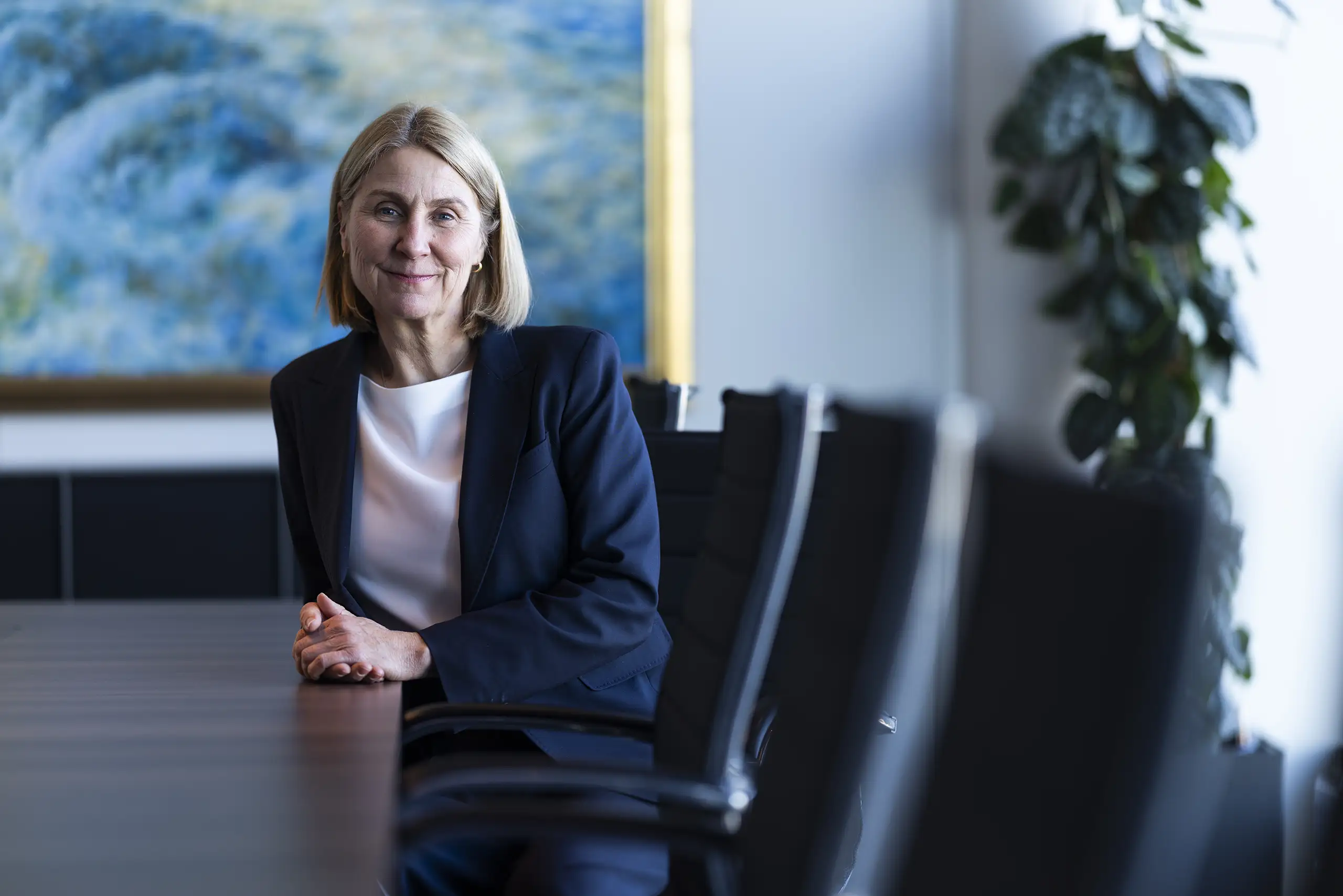
Photo: Anne Lise Norheim
Recent weeks have been marked by serious and troubling events in the Middle East. War and humanitarian suffering remind us how vulnerable the world is. In the face of a more uncertain time, our ability to cooperate and the trust we place in one another are becoming ever more important. They are, and will remain, the most important assets we have.
For me, the Norwegian continental shelf (NCS) has always been more than an industry; it’s been a promise. For more than five decades, we’ve shown what is possible when cooperation, competence and courage go hand in hand. Now we’re facing new times. With smart choices, a long-term perspective and the determination to think big, I’m confident that the NCS will remain a competitive and value-generating driving force for decades to come.
2025 was a very good year for Petoro. We delivered a net cash flow from the State’s Direct Financial Interest (SDFI) of NOK 243 billion, the third-highest in our nearly 25-year history. This is the result of good operations and reliable production over many years.
Nevertheless, what makes me most proud is that 2025 was also our best year ever for safety. Safety is at the core of everything we do. These results confirm that our long-term and systematic efforts have paid off. The people who work on the NCS and at the onshore plants deserve to return home safely every single day. This is a responsibility we never take lightly.
The Troll field delivered yet another strong year of production and remains a cornerstone for European energy security. This field is Norway’s largest gas supplier by far and covers about ten per cent of Europe’s gas consumption on its own. With our fields and gas infrastructure totalling about 8600 kilometres, Norway has a responsibility and an opportunity to remain a safe, stable and sought-after energy partner. This responsibility will become even more important when all Russian gas imports to Europe end in 2027.
2025 was also characterised by new opportunities. Johan Castberg came on stream in late March, and the Isflak discovery has already yielded promising additional volumes. Johan Sverdrup delivered a record-breaking year, and the decision to move forward with phase 3 development will ensure additional value creation in the years to come. The Verdande field came on stream, Åsgard increased gas recovery through new technology, and the Omega Alfa discovery in the Frigg Formation helped make 2025 the best exploration year since 2009.
As regards our fixed drilling facilities, we have seen a clear improvement in drilling efficiency: 22 wells – an increase of 47 per cent. This is the result of better planning, clearer priorities and closer cooperation with operators. Petoro has called for these improvements for several years, and they are now yielding measurable results.
At the same time, we need to face a challenging reality. Production will start declining in the early 2030s, and we will be unable to replace what we produce. This amplifies a clear message: We need to explore more, invest more, and work even smarter in the years to come – and this is urgent.
The Wisting, Linnorm and Peon development projects are now being matured toward profitable and robust concept choices.
The Snøhvit Future project is particularly important. Replacing the gas turbines with power from shore will cut emissions by 850,000 tonnes of CO2 annually, one of the largest single climate measures in Norway. At the same time, onshore compression will ensure that we can maintain production over the longer term. This means long-term revenue for the state, reliable gas exports to Europe and robust jobs and competence in Hammerfest and Finnmark.
Moving forward, we need to increase the discovery rate and realise more opportunities in mature fields. Grane, Gullfaks, Heidrun, Johan Sverdrup, Oseberg, Snorre and Visund are examples of fields where new discoveries in nearby infrastructure have yielded substantial added value.
Petoro’s forecasts show a 40 per cent reduction in emissions by 2030 compared with 2005. This will essentially be achieved through electrification projects. We’re proud of this. In order to ensure that the NCS remains competitive over the longer term, the oil and gas we produce needs to have both low costs and low emissions. Electrification, optimising operations and smarter reservoir management are key measures to achieve this. Artificial intelligence and new digital tools are already leading to better and faster decisions, which means higher value creation. We will be doing even more of this moving forward.
On 1 January, Petoro took over responsibility for the key gas infrastructure. Our job is to deliver gas infrastructure with the lowest possible user costs, high availability and comprehensive system development.
We have many opportunities and challenges ahead of us. To address them, we need highly skilled people. Norway is facing a serious challenge when it comes to science education, and the number of students choosing to study science subjects is declining. The EU goal is 32 per cent; the number in Norway is less than 18 per cent. This is unsustainable for a country and an industry that depends on world-leading expertise to succeed in both the energy transition and further developing the NCS. We need a clear national focus. Our future depends on it.
In turbulent geopolitical times, we need to rally around what made Norway a strong nation of energy and industry: the Norwegian model. Stability, a long-term perspective and trust are our bedrock. “Steady as she goes” has rarely been more fitting.
The NCS is competitive today. To maintain this position, the framework conditions need to remain stable, and the industry needs to be able to make long-term plans. This is why it’s so positive that, in 2027, the Government will be presenting the first white paper on petroleum policy in 15 years. Petoro is ready. We will invest, develop and contribute to long-term returns from the State’s petroleum portfolio – for the benefit of present and future generations.
I look forward to what we’ll achieve together: skilled colleagues at Petoro, strong industry partners, authorities and other stakeholders. Through creativity, trust and responsible operations, we will ensure maximum value creation from the resources Norway has been given.

Kristin Fejerskov Kragseth
Chief Executive Officer (CEO), Petoro AS